

CAN CBD LOTION GET INTO YOUR BLOODSTREAM?
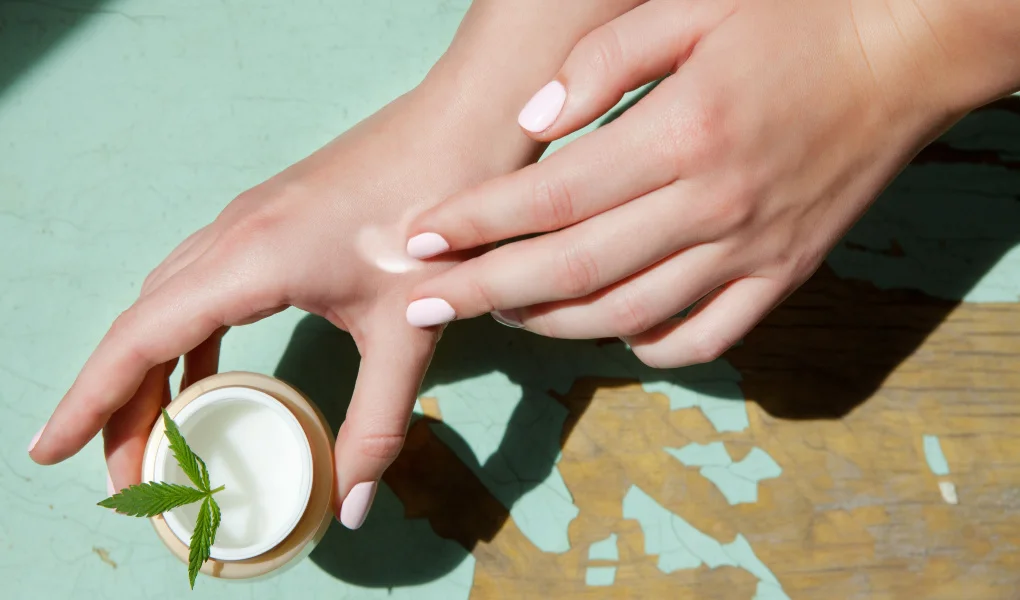
CBD lotions, like other topical products, will not go past the top layer of the skin into your bloodstream. For this reason, they do not make you feel high or show up in drug tests. Here is all you need to know about CBD lotions and how they work.
Many CBD fans like CBD lotions and opt for them for skin nourishment since they do not go beyond the top layer of the skin into the bloodstream. Still, they are effective and allow you to feel CBD effects through their interaction with the endocannabinoid receptors also found close to the skin. Besides CBD oil, CBD lotions have essential oils, hence why they feature many health benefits. Lotions are easy to use, and all you have to do is apply them to clean skin. Still, they have cons, including insufficient studies to back their effectiveness. This article helps you know more about CBD lotions as one of the primary ways to deliver CBD effects to the body.
CBD Basics
There is no CBD lotion without CBD, so you must know and appreciate CBD first. According to Mascal et al. (2019) and Kicman & Toczek (2020), CBD is a non-intoxicating cannabinoid mostly from hemp. Cannabinoids refer to the active chemical compounds in cannabis plants, CBD being one of them. Another cannabinoid that is attracting much scientific interest is THC, which according to Schlienz et al. (2018), is psychoactive and responsible for the high effect of smoking weed. Because of the high effect of THC, it is not everybody’s cup of tea despite the many health benefits people claim it has. Meanwhile, CBD is non-intoxicating, and many people can relate to it. Besides, Watt & Karl (2017) noted that CBD is therapeutic, and many people believe in such therapy and keep vouching for it.
What Is CBD Lotion?
Although people believe in CBD therapy and that taking the cannabinoid will benefit the body in many ways, it is worth noting that human cells cannot absorb CBD as a compound. Because of this, CBD manufacturers mix CBD with other compounds to make CBD deliverables, CBD lotions being one of them. They are not new in the market since lotions have been there for the longest time. Simply put, CBD lotions are skin emollients featuring CBD oil as one of the key ingredients. Other ingredients in CBD lotion include water, oils, and preservatives. Besides, CBD body lotions have different essential oils, adding to their benefits since Djilani et al. (2012) found the oils medicinal and therapeutic. Thankfully, the CBD industry is fast growing, and you can always find CBD lotions that meet your needs, regardless of your skin type. Besides, there are CBD lotions for the face, hands, and the whole body, and your choice depends on the body part you are targeting with the lotion.
What Is CBD Lotion Best for?
CBD is a novel compound, and its products are expensive. Thus, you must know what CBD products you want to buy are best for. This way, you buy products that best meet your needs. Have you ever wondered what CBD lotions are best for? They have many health pros, depending on the compounds they feature. CBD has many health benefits you can tap into by using CBD lotion. For instance, according to Atalay et al. (2019), CBD has powerful antioxidants, and using the lotion releases them into your body, reducing your risk of suffering the accumulation of free radicals. Besides, Kowalska et al. (2017) reported that hemp and CBD feature hydrators, meaning the CBD lotion would keep your skin hydrated. According to Klosner et al. (2020), hemp from which CBD lotion is made has fats, making the lotion nourishing to the skin. Schagen et al. (2012) also found CBD and hemp feature anti-aging properties, showing that CBD lotion boosts your skin condition. There is more you can reap from CBD lotion; you only have to focus on quality as you shop for the topicals and purpose of buying your CBD products from reputable brands. Schuelert & McDougall (2011), Gallily et al. (2015), and Hammell et al. (2016) found CBD great for fighting inflammation, hence why many people are after CBD lotion.
Cons of CBD Lotion
CBD lotions seem to have more to offer the skin, but it is worth noting that, like other skincare products, the lotions have their challenges. The biggest concern with CBD lotions and other topicals is the insufficient scientific studies to prove them effective. The studies above believe CBD helps with many things, but there is hardly enough evidence to prove them right. The other issue with CBD lotions is the compromised bioavailability. Of course, no CBD product is 100% bioavailable, but the cannabinoid’s bioavailability is even more compromised in the case of CBD lotions. If you choose CBD lotions as your primary way to reap CBD benefits, you must also be ready to deal with negative skin reactions. So far, no studies have proved that CBD can trigger negative skin reactions. Still, the individual ingredients in the lotion might be the problem, resulting in harsh skin responses.
Do CBD Lotions Get Into Your Bloodstream?
Let’s get to the meat of this article- CBD and the bloodstream; do CBD lotions get to your bloodstream? It is important to get the answer to this question since it determines whether you will get high from the lotion and if you will fail or pass drug tests because of the lotions. The straight answer to the question is a no. When you apply CBD lotion to the skin, the cannabinoids in it barely go beyond the top layer of the skin into the bloodstream. Still, you can feel CBD effects from the lotion since the tensed muscles on the skin take up CBD and disseminate it to the other body parts but not into the bloodstream. If CBD lotion does not get into the bloodstream, how does it work? The next section helps you get the answer to this question.
How Do CBD Lotions Work?
Whether you take CBD through ingestible and edible products or apply it to the skin as with CBD lotion, the system responsible for CBD effects is the same. CBD studies ate in infancy, but there is at least some information on how CBD works. According to Di Marzo & Piscitelli (2015) and McPartLand et al. (2015), CBD, THC, and other external cannabinoids interact with the endocannabinoid system to produce the positive effects linked to them. Lu & Mackie (2016) noted that the system features endocannabinoids, enzymes, and endocannabinoid receptors which work harmoniously to keep all the processes running. Zou & Kumar (2018) stated that sleep, pain regulation, mood changes, and digestion all depend on the ECS to keep in the state of equilibrium. Although studies have revealed that THC has a high affinity for the ECS receptors and binds to the CB1 and CB2 receptors, it is unclear how CBD interacts with them. Yet, Eskander et al. (2020) commented that the CBD-ECS interaction is positive, resulting in reduced chronic back pain. With more studies, it will be clear how CBD interacts with the ECS receptors.
How Many Times Should You Apply CBD Lotion?
How much you get from CBD lotion largely depends on how well you use it. CBD lotions are easy to use, and their experience is more like what you feel while using other emollients. How many times do you have to apply CBD lotions? Generally, people use CBD lotions twice daily, in the morning and night. Yet, there is no hard and fast rule on the same. How much you apply the lotion might depend on your skin type. The moisturized and soft your skin is, the more you will need limited amounts of the lotion and application frequency to benefit from the lotion. However, people with dry skin might have to apply CBD lotions several times to realize the emollient’s effect on the skin. How sensitive your skin is to the lotion also matters, determining how many times you can apply it. For instance, if your skin reacts to some ingredients in the CBD lotion, you must limit the number of times you apply it.
How Do You Find the Best CBD Lotion for You?
There are many CBD brands, and many deal in CBD topicals, probably including CBD lotions. Thus, there are many options to tap on, making it challenging for you to settle for any. How do you know your match for CBD lotions? According to the Yahoo Sports (2021) report, choosing a topical product largely depends on your skin type. The CBD lotion you want to buy should be a perfect match for your skin and just what you need. For instance, people with oily skin need thinner CBD lotions with more water than oils. Meanwhile, the drier the skin, the more you need oilier options as far as CBD lotions that best match your skin is concerned. Besides, if you are allergic and react to some compounds, ensure the CBD lotion you buy does not feature such harsh compounds.
Do CBD Lotions Make You High?
Although many would like to try different cannabis and CBD products, they hold on since they are unsure how the body will react to the compounds. The high effect of THC is a concern to many who would like to know if CBD topicals like CBD lotions will make them feel weird. Bauer et al. (2020) noted that CBD is non-psychoactive, showing that the cannabinoid and the compounds that feature it will not make you high. However, the THC percentage in CBD products matters and determines what you feel from the product. Since THC is psychoactive, the more its percentage is in a product, the higher the chances of getting high from the product. However, this does not apply to CBD lotions and other topicals. Since they do not allow the cannabinoids in them to reach the bloodstream, the THC percentage is not a factor in whether you will get high from them. Thus, you can rest assured that CBD lotions will not make you high.
Do You Fail Drug Tests from CBD Lotions?
Besides the high effect, many CBD fans would like to know how CBD lotions and other topicals link to drug tests. Do you fail drug tests because of CBD lotions? First, you need to understand how cannabis drug tests work to understand why CBD lotions will or will not show up in the tests. Cannabis drug tests use saliva, blood, urine, or hair as the specimen and strive to detect THC and its metabolites in your system. CBD lotion will not show up in drug tests, whether it is THC-free or features THC traces. This is because the lotion is a topical product, so it does not allow CBD. THC and other cannabinoids do not go beyond the top layer of the skin into the bloodstream. Still, quality is key; hence you must strive to ensure the CBD lotion you are buying does not feature contaminants or harsh compounds that the skin reacts to.
How Much CBD Should Your CBD Lotion Have?
One question CBD fans ask before buying any CBD product is how much CBD a product needs to have. Are you contemplating using CBD lotion? You must be worried about the CBD potency. Sadly, the FDA does not look at CBD lotions as medication for anything, so it does not recommend how much CBD needs to be in different products. Still, as a rule of thumb, you must keep CBD potency and dosages in every product you opt for when new to the CBD world. However, as you get used to CBD, you can work your way up. While CBD may be well tolerated, too much of it may be dangerous. For instance, Ewing et al. (2015) found that too much CBD leads to liver swelling, damage, and toxicity in 8-week-old mice. Although too much CBD in lotions might not get past the bloodstream to affect the liver and other organs, it is safe to err on the side of caution.
Finding the Best CBD Lotion- What to Look at
Are you set to join the CBD regime and apply CBD lotions? You must get ready for the search. Many CBD companies deal in CBD topicals, and finding CBD lotion is no big deal. However, the many CBD brands present a challenge on their own telling apart genuine products from counterfeit ones is more challenging. That said, paying attention to the following factors boosts your chances of landing quality CBD lotions;
i. Ingredient list; although CBD lotions might not cause you irritation, the individual ingredients it features might be. Thus, you must pay keen attention to what makes up the lotion.
ii. Environmental factors; with much emphasis on natural alternatives, it is better to focus on CBD lotions and topicals that use organic ingredients.
iii. Extraction method; the extraction method for CBD determines whether the lotion in question will have solvent traces and other contaminants or not.
iv. Contaminant purity; ensure the CBD lotion passes contaminant tests and does not have solvents, heavy metals, toxins, and other contaminants,
v. Reputation; read the brand’s reputation on its websites and external sites like the FDA and BB+ to know what name it holds in the market.
vi. Transparency; the more transparent a brand is, the better. Thus, only buy CBD lotion from companies that demonstrate transparency and provide a CoA as proof of 3rd party tests.
Can I Use CBD Lotion on the Face?
There are many types of CBD lotions, depending on the intended body part to which the lotion should be applied. You can have CBD hand, body, or face lotion, and others. Buying a CBD body lotion and using it for all body parts sounds brilliant since it helps you save on cost. Still, is it ok to apply CBD body lotion on the face? No, the ingredients in the lotion are designed for other body parts, not the face. The face is the most sensitive of the skin and may react to ingredients in the CBD lotion. Thus, while using the body lotion on the face helps you save costs, it is not the best way to go.
Why Does My Skin Itch after CBD Lotion?
Some people report itchy skin after applying CBD lotion, and if you have experienced the same, you will likely wonder what the issue is. Could CBD be irritating? According to Hammell et al. (2016), CBD helps with inflammation, clearly showing that it helps relieve irritation instead of worsening it. Why, though, does the skin itch after CBD lotion? It could be that the lotion features harsh chemicals that the skin reacts to. Besides, it could be that you are allergic to the ingredients making up the lotion, all the more why you itch. You could try changing lotions to determine if the lotion is the problem or your skin is.
Are CBD Lotions Safe?
People are concerned about the safety of any product they buy, and many wonder if CBD lotion is safe. According to Corroon & Phillips (2018), CBD features a great safety profile and is well-tolerated. Yet, the lack of regulation in the CBD world is a concern and may compromise the safety of CBD topicals. The FDA does not regulate CBD production, but it issues warming letters to brands that do not meet the set standards. Besides, insufficient CBD studies are a cause for concern. There are many research papers on CBD, but none offers convincing evidence for CBD claims. With this in mind, you opt for CBD lotions, knowing the cons and pros surrounding them.
Conclusion
CBD lotion and topicals do not go past the top layer of the skin into the bloodstream. This is a plus since you don’t get high or fail drug tests because of the topicals. Still, CBD lotions are effective for inflammation and skin hydration, among other benefits. Through its interaction with the endocannabinoid system, CBD lotion results in the many benefits linked to it. You can find CBD lotion online and in-store; you only need to know how to get the best for you. Choosing a match for your skin is about knowing your skin type. Before settling for it, you also need to pay attention to CBD extraction and the additional ingredients in the lotion. Peer into this article for more on CBD lotion.
References
Atalay, S., Jarocka-Karpowicz, I., & Skrzydlewska, E. (2019). Antioxidative and Anti-
Inflammatory Properties of Cannabidiol. Antioxidants (Basel, Switzerland), 9(1), 21.
Baswan, S. M., Klosner, A. E., Glynn, K., Rajgopal, A., Malik, K., Yim, S., & Stern, N.
(2020). Therapeutic Potential of Cannabidiol (CBD) for Skin Health and
Disorders. Clinical, cosmetic and investigational dermatology, 13, 927–942.
Bauer, B. A. (2020). What Are The Benefits Of CBD–And Is It Safe To Use? In Mayo Clinic.
Corroon, J., & Phillips, J. A. (2018). A Cross-Sectional Study of Cannabidiol Users.
Cannabis and cannabinoid research, 3(1), 152–161.
Djilani, A., & Dicko, A. (2012). The therapeutic benefits of essential oils. Nutrition, well-
being and health, 7, 155-179.
Di Marzo, V., & Piscitelli, F. (2015). The endocannabinoid system and its modulation by
phytocannabinoids. Neurotherapeutics, 12(4), 692-698.
Eskander, J. P., Spall, J., Spall, A., Shah, R. V., & Kaye, A. D. (2020). Cannabidiol (CBD)
as a treatment of acute and chronic back pain: A case series and literature review.
J Opioid Manag, 16(3), 215-8.
Ewing, L. E., Skinner, C. M., Quick, C. M., Kennon-McGill, S., McGill, M. R., Walker, L.
A. … & Koturbash, I. (2019). Hepatotoxicity of a cannabidiol-rich cannabis extract
in the mouse model. Molecules, 24(9), 1694.
Gallily, R., Yekhtin, Z., & Hanuš, L. O. (2015). Overcoming the bell-shaped dose-
response of cannabidiol by using cannabis extract enriched in cannabidiol.
Pharmacology & Pharmacy, 6(02), 75.
Hammell, D. C., Zhang, L. P., Ma, F., Abshire, S. M., McIlwrath, S. L., Stinchcomb, A. L.,
& Westlund, K. N. (2016). Transdermal cannabidiol reduces inflammation and
pain-related behaviours in a rat model of arthritis. European journal of pain
(London, England), 20(6), 936–948.
Kicman, A., & Toczek, M. (2020). The effects of cannabidiol, a non-intoxicating
compound of cannabis, on the cardiovascular system in health and disease.
International journal of molecular sciences, 21(18), 6740.
Kowalska, M., Wozniak, M., & Pazdzior, M. (2017). Assessment of the sensory and
moisturizing properties of emulsions with hemp oil. Acta Polytech. Hung, 14(8).
Lu, H. C., & Mackie, K. (2016). An Introduction to the Endogenous Cannabinoid
System. Biological psychiatry, 79(7), 516–525.
Mascal, M., Hafezi, N., Wang, D., Hu, Y., Serra, G., Dallas, M. L., & Spencer, J. P. (2019).
Synthetic, non-intoxicating 8, 9-dihydrocannabidiol for the mitigation of seizures.
Scientific reports, 9(1), 1-6.
McPartland, J. M., Duncan, M., Di Marzo, V., & Pertwee, R. G. (2015). Are cannabidiol
and Δ9‐tetrahydrocannabivarin negative modulators of the endocannabinoid
system? A systematic review. British journal of pharmacology, 172(3), 737-753.
Schagen, S. K., Zampeli, V. A., Makrantonaki, E., & Zouboulis, C. C. (2012). Discovering
the link between nutrition and skin aging. Dermato-endocrinology, 4(3), 298–307.
Schlienz, N. J., Lee, D. C., Stitzer, M. L., & Vandrey, R. (2018). The effect of high-dose
dronabinol (oral THC) maintenance on cannabis self-administration. Drug and
alcohol dependence, 187, 254-260.
Schuelert, N., & McDougall, J. J. (2011). The abnormal cannabidiol analogue O-1602
reduces nociception in a rat model of acute arthritis via the putative cannabinoid
receptor GPR55. Neuroscience letters, 500(1), 72–76.
Watt, G., & Karl, T. (2017). In vivo evidence for therapeutic properties of cannabidiol
(CBD) for Alzheimer’s disease. Frontiers in pharmacology, 8, 20.
Yahoo Sports (September 2021). Here’s What You Need to Know About Using Body Oil
vs. Lotion – According to a Professional.
Zou, S., & Kumar, U. (2018). Cannabinoid Receptors and the Endocannabinoid System:
Signaling and Function in the Central Nervous System. International journal of
molecular sciences, 19(3), 833.