

HOW LONG DOES CBD CREAM STAY IN YOUR SYSTEM?
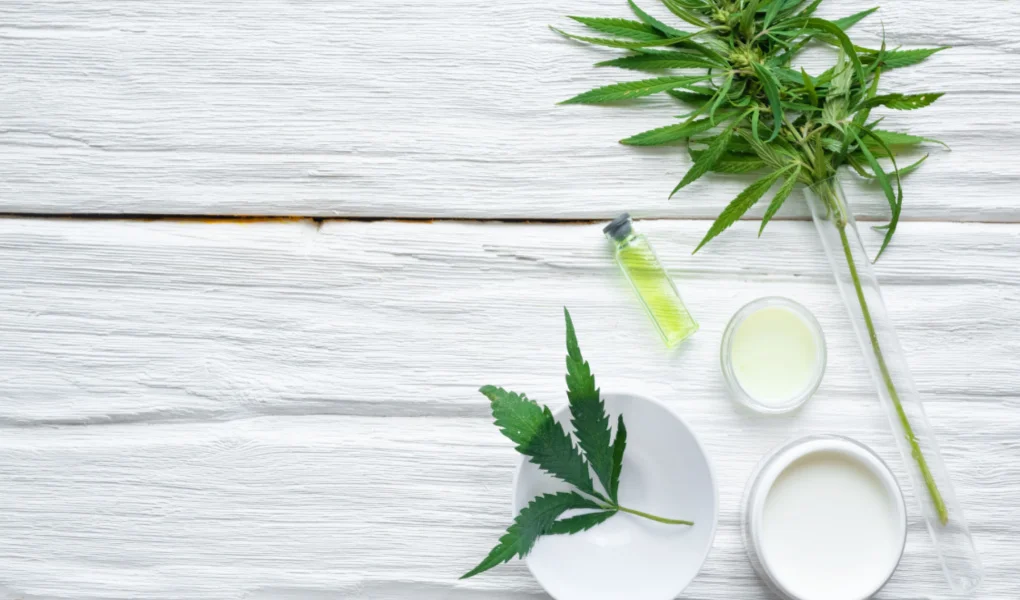
Depending on many factors, CBD may stay in your system for hours to months. However, CBD creams do not go past the top layer of the skin into the bloodstream, so it does not stay in the system. Here is all you need to know about CBD creams.
Depending on the type of CBD product you are using, CBD may last in your system for hours to months. However, CBD in the creams does not go beyond the top layer of the skin into the bloodstream and will not last in your system. Besides, since the cannabinoids in the CBD creams barely go beyond the top layer of the skin into the bloodstream, you will not fail drug tests and feel high because of the creams. People use CBD creams to manage pain and inflammation, and research sees potential in the cannabinoid helping with many health challenges. Here is all you need to know about CBD creams before opting for them.
CBD Basics
CBD is the parent compound in CBD creams, so you must know and appreciate it before exploring the extensive benefits of CBD creams. According to Mascal et al. (2019), CBD is a non-intoxicating cannabinoid majorly extracted from hemp. Hemp is a plant in the cannabis class and has many active compounds called cannabinoids, CBD being one of them. Nature has more than 100 cannabinoids, but CBD tops the list of the widely sought cannabinoids. For instance, the Forbes Health (2022) report showed that 60% of 2,000 US adults in a study were taking at least some form of CBD. The American Academy of Dermatology (Feb 2018) noted that many CBD fans take topicals for skin challenges. Why the much hype on CBD products? According to Watt & Karl (2017), CBD is therapeutic, and many people want to explore CBD therapy. Thus, CBD seems to be the answer, and it is taken for anything, including pain, inflammation, and skin challenges.
What Is a CBD Cream?
CBD promises to offer the body many benefits, but it is worth noting that human cells cannot absorb it as it is. Thus, CBD manufacturers coin CBD with other products to make CBD deliverables or products from which the body can benefit. There are many CBD deliverables, CBD creams being among them. They are among the many topical CBD products on the market, which you can explore for skin benefits. CBD cream is an ointment-like CBD-infused product. It is designed with the skin in mind and should not be used otherwise. There are CBD creams for the whole body, but you could buy one for the face or hand. You can buy your CBD creams online or in-store, each method featuring pros and cons that one must deal with. According to Schuelert & McDougall (2011), CBD helps with inflammation, and many CBD fans are after CBD creams for such benefits.
How Do You Apply CBD Creams?
Like other skincare products, how much you can get from CBD creams depends on how well you use the cream. Buying quality CBD creams from reputable brands is one thing and using them to get the most out of it is another. How do you apply CBD creams? They are easy to and follow the simple steps below;
i. Wash the skin or the surface to which you want to apply the cream
ii. Pat dry the skin with a clean towel but avoid drying the skin too much
iii. Press out a little cream or use your fingertip to get enough cream
iv. Put the cream on the palm and rub it with the other palm to activate the cream
v. Apply the CBD cream to the target area, gently massaging it fully for the body to get the most from the cream
vi. Allow the skin to absorb the CBD cream
CBD cream is as easy as shown above, and there is no need to worry about anything. Thankfully, some CBD brands write the instructions for use on the CBD cream label, even making your work easier.
How Long Does CBD Cream Stay in Your System?
Back to the article’s meat, you want to know how long CBD cream will stay on your system. There is no exact time CBD lasts on the system of every user. Rather, it is a range of hours to months, and many factors come to play as far as this is concerned. For instance, the product you used to take CBD matters, determining whether the cannabinoid will clear out fast or last in the system for long. CBD creams do not get into our bloodstream, so they are nowhere in your system. Still, you may wonder how one can feel CBD effects if the cannabinoid does not get into the system. According to Eskander et al. (2020), CBD topicals interact with endocannabinoid receptors on the skin and result in the positive effects of CBD.
CBD Cream Pros
CBD creams are among the most widely sought CBD products, and you can reasonably wonder how this is possible. Most importantly, people appreciate that CBD creams allow you to reap CBD benefits without interacting with your system. Many people want to explore CBD benefits but not its interaction with the blood system, which CBD creams do perfectly well. Second, CBD creams are easy to use, as detailed above. CBD fans also appreciate that CBD creams save them the hassle of measuring out CBD and erring while still allowing them to enjoy CBD benefits. Moreover, CBD creams are easy to move around with. Do you have a skincare kit? You can put the cream there and easily move around without fearing getting clumsy in because of spillages. And if you want to apply CBD creams, you need not worry about getting people’s attention since it is like any other cream.
Cons of CBD Creams
Despite the many pros of CBD creams, the CBD deliverables have their fair share of challenges you must deal with. For instance, the lack of CBD regulation also affects the creams. According to AP News (2019) and CDC (2020) reports, CBD products could sneak contaminants into your system. Of course, CBD creams do not allow the ingredients they feature to enter the bloodstream, but the latter may irritate the skin. Corroon & Phillips (2018) noted that CBD has a great safety profile, but this does not mean you can use any CBD cream without worrying about a thing. The other challenge with CBD creams is that their effectiveness is yet to be determined. Since creams do not go beyond the top layer of the skin, more research is needed to prove them effective.
How Long Does the CBD in Edibles, Vapes, and Tinctures Last in the System?
CBD in the CBD creams does not go past the top layer of the skin into the bloodstream, meaning it does not stay in the system. However, you may wonder if this is true for CBD in edibles, oils, vapes, and other products that interact with the blood. As mentioned at the outset, the time the cannabinoid takes in one user’s system is not the same as the time it takes in another user. Many factors come into play in determining how long the cannabinoid stays in the system, CBD metabolism and the type of CBD product you took being among them. For instance, CBD vapes allow you to feel CBD effects fast, but the body also clears it out fast, so it only lasts a few minutes to hours, while the CBD in oils and edibles may last for days, weeks, or even a month. The faster your body processes CBD, the faster it leaves your system. On the other hand, the more CBD you take and the higher the frequency of taking the cannabinoid, the longer you can expect it to be in your system. It is also worth noting that your inherent body factors might influence CBD metabolism, making the cannabinoid stay shortly or long in your system. You cannot tell how long CBD will last in your system until you join its bandwagon.
How Long Does CBD Take to Work?
When taking CBD products for pain, sleep, or other health benefits, you are more than concerned about seeing the effects of the cannabinoid, hence the question about how long CBD takes to work. Sadly, no specific figure applies to all CBD users as far as how long CBD takes to work is key. It may take one CBD user 15 minutes or less to feel CBD effects, while another user might have to wait for up to one hour or more to feel CBD effects. Many factors come to play as how long CBD takes to work is concerned. For instance, CBD metabolism is key since the faster the cells can process CBD, the faster you look forward to CBD effects, while another CBD user with slow CBD metabolism might have to wait for the effects for longer. The type of CBD product you are taking also affects how long CBD effects take to surface. For instance, CBD vapes are the fastest in CBD delivery, followed by CBD oils and tinctures. Meanwhile, CBD topicals take time to produce the expected results since they do not allow the cannabinoid to interact with the system. Your CBD history is yet another factor in how long the cannabinoid will take to work. When new to CBD, you might wait for the effects for long, but this might improve as you get more engrossed in CBD products. The higher the potency of CBD products, the faster the effects may come, but this does not always have to be the case, especially if CBD effects are not biphasic.
CBD and the High Effect
If you are going to use and CBD product, you want to know about the high effect. Schlienz et al. (2018) reported that THC is psychoactive in its action and that it can make one high. How about THC? Does it make you high? According to Bauer et al. (2020), CBD is non-psychoactive and does not make you feel high. Still, the THC percentage in the CBD product matters in determining whether you will feel a little intoxicated from them. For instance, isolate and broad-spectrum CBD feature no CBD, so you are less likely to get high from them. Meanwhile, most full-spectrum CBDs have less than 0.3% THC and will not make you high. However, as the THC concentration in any CBD product increases, the chances of getting high are maximum. However, this is not the case with CBD topicals like CBD creams. They do not allow the cannabinoid in them to get into the bloodstream, so you will not get high from them, regardless of the THC concentration.
CBD and Drug Tests
Besides the high effect, people would like to know if CBD will make you fail drug tests. Being in the sports world or taking an interview in the foreseeable future means you might have to take drug tests, hence the need to know if CBD will make you fail drug tests. Drug tests look for THC and its metabolites. Thus, isolate and broad-spectrum CBD, which have no THC and will not show up in drug tests. However, the quality of the product matters, where low-quality CBD products might show up in drug tests despite being labeled as THC-free. Meanwhile. The chances of full-spectrum CBD making you fail drug tests are high since they have THC traces.
How Many Times Do You Apply CBD Creams?
Are you set to explore CBD benefits? One question you would have when it comes to CBD creams is how often you should apply them. Most CBD brands indicate on the CBD creams how often you should use them; hence this should not be much of a big deal. Besides, you can talk to your doctor about the CBD cream, and you may get recommendations on how to administer the cream. If all gets to odd, you might have to determine on your own how many times you are going to apply the cream. Most ointments are best applied three times daily, and you could apply the same for CBD creams. However, the frequency of CBD cream use majorly depends on why you are using the cream. For instance, if you have it as part of your daily skincare regime, you would apply it twice with other skincare products, mostly in the morning and evening. Meanwhile, if you use the cream to manage a skin problem, you might have to apply it three times daily.
How Much CBD Should Your CBD Cream Have?
The FDA does not look at CBD as a drug for treating or curing a health problem, so it does not recommend how it is dosed. Still, as a rule of thumb, keep CBD dosages and potency low as you join the CBD bandwagon, which you can increase as you get used to the cannabinoid. Besides, CBD metabolism determines how much CBD will be in the cream. Fast CBD metabolism means your system processes CBD fast and will put it to use, while slow CBD metabolism means too much CBD might overwhelm the system. According to Ewing et al. (2015), too much CBD can lead to liver toxicity. Of course, the CBD in the cream might not get the liver and result in toxicity, but it is better to err on the side of caution. Lastly, on this, the severity of the condition for which you are using the CBD cream matters. The severer the condition, the more potent the cream needs to be.
Types of CBD in CBD Creams
Buying CBD creams might sound great until you get to the market and realize just how many options you need to choose from. You can save yourself the hassle and time wasted on choosing this or that CBD cream by knowing the types of CBD you expect in the cream. You can enjoy CBD cream in the following forms;
i. Full-spectrum CBD; features CBD with THC and other cannabis compounds. According to Russo et al. (2011), the many compounds in full-spectrum CBD result in synergy called a full entourage effect, which is the primary reason behind the widespread of this type of CBD.
ii. Isolate CBD; features pure CBD without THC or other hemp compounds.
iii. Broad-spectrum CBD; is more like full-spectrum CBD in composition but does not have THC. It is great for whoever wants a THC-free full entourage effect.
Are CBD Isolate Creams Inferior?
Choosing between the three types of CBD can be challenging. Is there a special type of CBD? Does the lack of other cannabis compounds make isolate CBD inferior? According to Gallily et al. (2015), CBD isolate can fight inflammation using the dose-specific approach. Perucca (2017) also found CBD isolates great for seizures, showing that the cannabinoid is not inferior. The only difference between CBD isolates and the other two types of CBD is the lack of additional compounds, which does not make it inferior.
Know Your Skin
Are you ready to use CBD cream? You must know your skin. Besides investing in quality products and using them well, you must get a cream that matches your skin type to get the most from it. Thankfully, you can get CBD creams for all types of skin, dry and oily. Oily skin needs more water in the cream and less oil. However, if your skin is dry, you need CBD creams with more oil. Ultimately, you will get the right product for your skin, yet with a little patience.
Conclusion
CBD creams do not interact with your blood system, so they do not stay in the system. This is a plus for the CBD creams and other topicals since they do not make you high or show up in drug tests, regardless of their THC percentage. The rest products stay in the system for hours or months, depending on many factors. The product you took matters, where CBD vapes leave the system fast while CBD in the edible and oils might last in the body for long. How much CBD you take and the frequency in which you administer it also affect CBD’s stay in the system. The more CBD you take, the longer the cannabinoid lasts. Read this article to learn about CBD creams, including how they interact with the body.
References
American Academy of Dermatology. (Feb, 2018). Public, researchers demonstrate
growing interest in cannabis treatment. Topical application shows promise for
skin diseases.
AP News (2019). How the Associated Press Collected Information on CBD Vapes.
Bauer, B. A. (2020). What Are The Benefits Of CBD–And Is It Safe To Use? In Mayo Clinic.
Centers for Disease Control and Prevention. (2020). Outbreak of lung injury associated
with the use of e-cigarette, or vaping, products.
Corroon, J., & Phillips, J. A. (2018). A Cross-Sectional Study of Cannabidiol Users.
Cannabis and cannabinoid research, 3(1), 152–161.
Eskander, J. P., Spall, J., Spall, A., Shah, R. V., & Kaye, A. D. (2020). Cannabidiol (CBD)
as a treatment of acute and chronic back pain: A case series and literature review.
J Opioid Manag, 16(3), 215-8.
Ewing, L. E., Skinner, C. M., Quick, C. M., Kennon-McGill, S., McGill, M. R., Walker, L.
A. … & Koturbash, I. (2019). Hepatotoxicity of a cannabidiol-rich cannabis extract
in the mouse model. Molecules, 24(9), 1694.
Forbes Health (2022). What to Know about Types of CBD.
Gallily, R., Yekhtin, Z., & Hanuš, L. O. (2015). Overcoming the bell-shaped dose-
response of cannabidiol by using cannabis extract enriched in cannabidiol.
Pharmacology & Pharmacy, 6(02), 75.
Mascal, M., Hafezi, N., Wang, D., Hu, Y., Serra, G., Dallas, M. L., & Spencer, J. P. (2019).
Synthetic, non-intoxicating 8, 9-dihydrocannabidiol for the mitigation of seizures.
Scientific reports, 9(1), 1-6.
Perucca E. (2017). Cannabinoids in the Treatment of Epilepsy: Hard Evidence at Last?
Journal of epilepsy research, 7(2), 61–76.
Russo, E.B., 2011. Taming THC: potential cannabis synergy and phytocannabinoid‐
terpenoid entourage effects. British journal of pharmacology, 163(7), pp.1344-1364.
Schlienz, N. J., Lee, D. C., Stitzer, M. L., & Vandrey, R. (2018). The effect of high-dose
dronabinol (oral THC) maintenance on cannabis self-administration. Drug and
alcohol dependence, 187, 254-260.
Schuelert, N., & McDougall, J. J. (2011). The abnormal cannabidiol analogue O-1602
reduces nociception in a rat model of acute arthritis via the putative cannabinoid
receptor GPR55. Neuroscience letters, 500(1), 72–76.
Watt, G., & Karl, T. (2017). In vivo evidence for therapeutic properties of cannabidiol
(CBD) for Alzheimer’s disease. Frontiers in pharmacology, 8, 20.